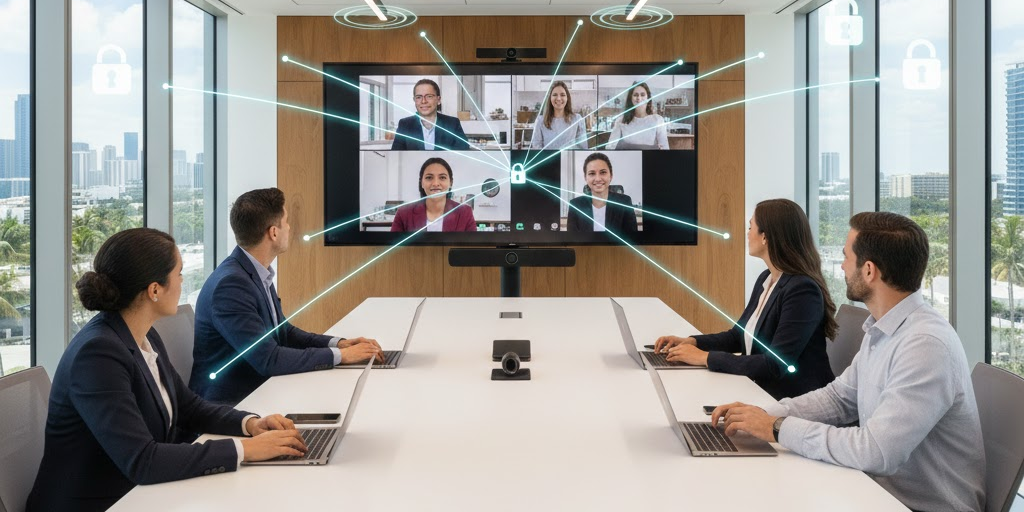
Crystal clear audio defines the quality of a meeting. When clients cannot hear you or your team struggles with distorted sound, the entire experience suffers. Choosing the best sound system for a conference room involves more than buying good speakers. It requires understanding how microphones, speakers, acoustic treatment, and conferencing platforms work together.
Below is a simple guide to help you choose a professional sound system that improves communication across every meeting.
What Makes a Sound System Effective:
Clear Voice Pickup
A good conference microphone captures voices evenly, whether people sit close to the table or across the room. Ceiling mics, beam forming arrays, and high sensitivity tabletop mics all offer reliable coverage.
Room Friendly Speakers
Speakers must distribute sound evenly, so everyone hears remote participants clearly. Wall mounted, ceiling integrated, or sound bars work well depending on room size.
DSP Processing for Noise and Echo Control
A digital signal processor removes background noise, Acoustic echo cancelation , and level fluctuations. It ensures the sound always remains balanced and natural.
The system should work effortlessly with Zoom, Microsoft Teams, and Google Meet without repeated adjustments.
Professional Calibration
Even premium devices perform poorly if they are not tuned to the room size, materials, and seating layout.
Contact Support305 today for a free consultation to design a conference room sound system that delivers natural, reliable audio for every meeting.