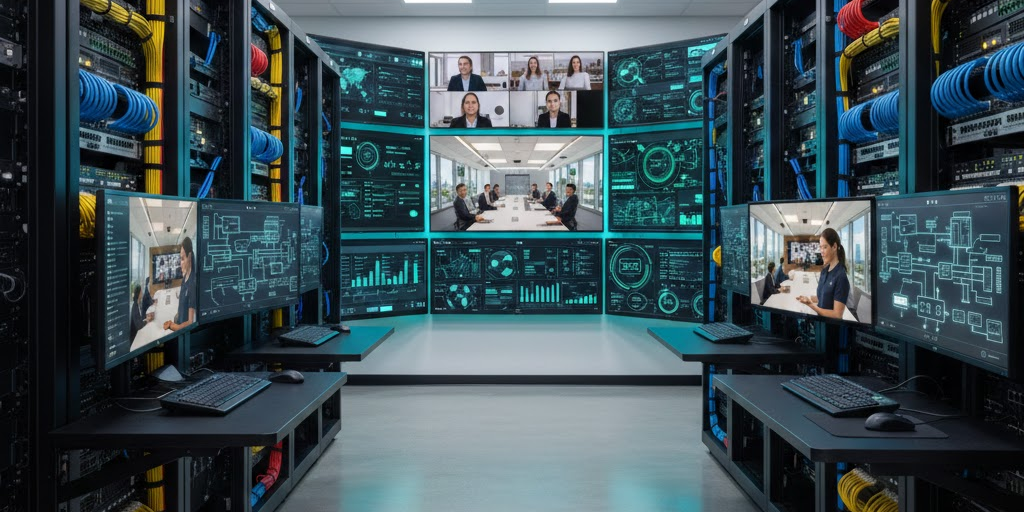
A well designed network is not just about raw internet speed. In modern workplaces, multiple video calls, live presentations, and cloud based collaboration tools run simultaneously. Without proper planning, this traffic competes for bandwidth and leads to lag, jitter, or dropped calls during critical meetings. Investing in professional network infrastructure is essential for seamless communication and consistent video conferencing performance.
Businesses that rely on real time communication benefit most when network design is supported by managed IT services that ensure consistent performance and proactive monitoring.Aligning network infrastructure with conference room technology ensures reliable audio and video performance during every meeting.
Why Network Design Matters for Video Conferencing
Reduced Latency
Strategic configuration such as VLAN segmentation and traffic prioritization ensures video and audio packets travel efficiently across the network. Proper planning supports platforms used in modern video conferencing systems without interruptions even during peak usage.
Enhanced Reliability
Enterprise grade switches, redundancy planning, and Quality of Service controls reduce packet loss and downtime. Well managed networks play a key role in supporting managed IT services for businesses that depend on always on collaboration tools.
Scalability
Segmented and well structured networks allow organizations to add new meeting rooms, devices, or locations without impacting performance. This flexibility supports long term growth and integrates smoothly with cloud based collaboration solutions.
Security
Separating video conferencing traffic from general office systems improves security and protects sensitive conversations. Network segmentation and access controls are critical components of business network security strategies.
Best Practices for Video Conferencing Network Design
• Allocate dedicated bandwidth for video and audio traffic
• Apply QoS policies to prioritize real time communication
• Use managed switches for consistent traffic control
• Monitor network performance to detect bottlenecks early
• Align network planning with AV and conferencing requirements
Following these best practices ensures your network supports high quality communication across all meeting spaces.
If your meetings suffer from poor call quality or dropped connections, contact Support305 today for expert network optimization. Our team delivers network infrastructure solutions in South Florida that support seamless video conferencing and uninterrupted corporate collaboration.